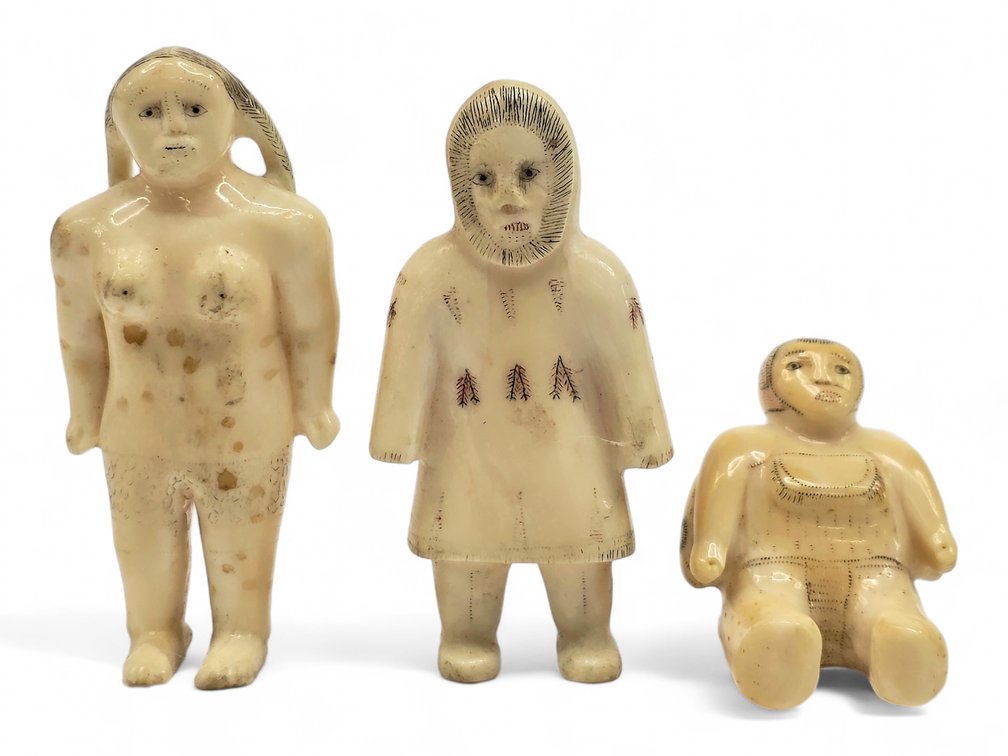
#114 • Group of Three Early Eskimo & Inuit Female Walrus Tusk Figures
Part of June 2026 Premier Auction (live auction by Alaska Premier Auctions & Appraisals)
High bid $850.00
Status: SOLD
Category: Ethnographic Objects
Three carved walrus tusk female figures, each rendered in a highly stylized manner with incised facial features and scrimshaw details defining hair, garments, and body ornamentation. The largest figure depicts a woman with long braided hair, bare feet, and spotted seal skin trousers indicated by delicate incised markings. The central standing figure wears a hooded parka embellished with geometric motifs and radiating lines around the face suggesting fur trim, while the smallest seated figure displays finely engraved decorative details across the chest, sleeves, and lower garment. Though differing in execution, all three possess the simplified forms and expressive faces characteristic of early Eskimo and Inuit carving. The largest figure measures approximately 1" x 2.25" tall. Dating to the late 19th or early 20th century, the group reflects the transition from traditional tusk carving to the flourishing curio trade that emerged in Alaska and the Canadian Arctic at the turn of the century. Particularly appealing are the distinctive facial expressions, braided hairstyle, and carefully rendered clothing details, which provide valuable insight into Indigenous dress and artistic traditions. Such small figural carvings were avidly collected by early anthropologists and museum researchers, and examples with comparable age and character are increasingly scarce. Provenance: From the collection of Dr. Henry B. Collins and descendants. Collins (1899-1987) served as Senior Archaeologist and Head Curator of Ethnology at the Smithsonian Institution and spent decades conducting research throughout Alaska and the Bering Strait region.