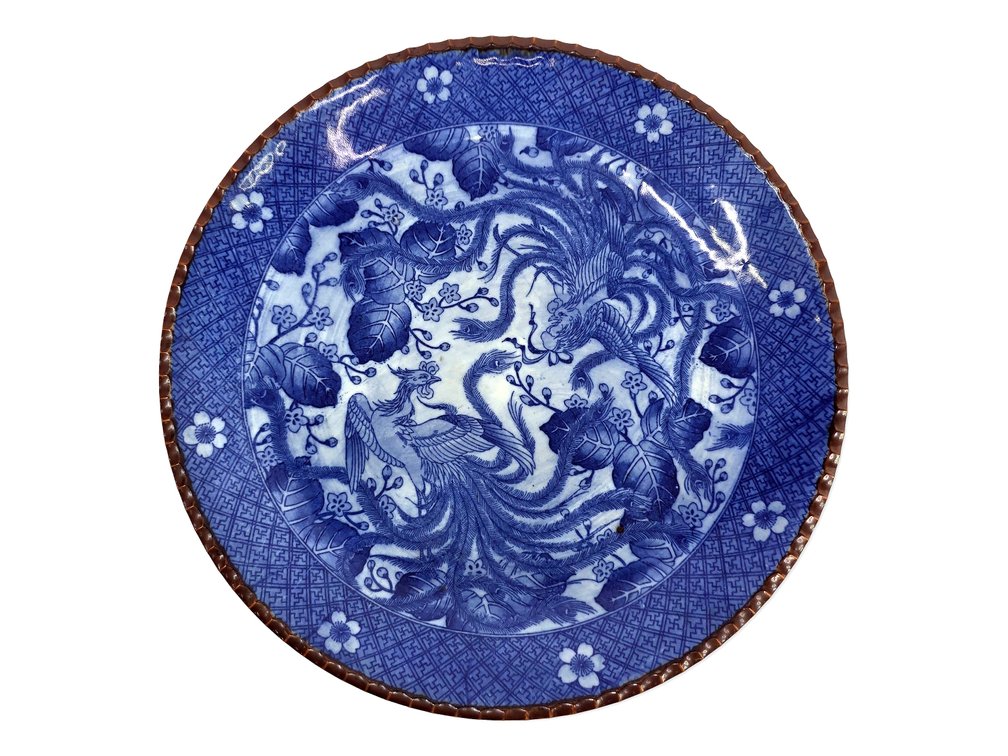
#153 • Japanese Igezara Blue & White Phoenix Charger, c. 1900
Part of Fall 2026 Premier Auction (live auction by Alaska Premier Auctions & Appraisals)
High bid $225.00
Status: SOLD
Category: Ceramics
A Japanese Igezara porcelain charger, late Meiji to early Taishō period, circa 1900–1920, richly decorated in underglaze cobalt with paired phoenixes among flowering paulownia. The broad circular form provides a generous setting for the intricate composition, enclosed by a deeply notched, iron-brown rim whose warm color contrasts with the cool blue and white decoration. Two crested phoenixes, or hō-ō, turn in opposing directions within the central roundel, their curved necks and outspread wings balanced by long, extravagantly curling tail feathers. Fine lines distinguish the layered plumage, while broad paulownia leaves, branching flower clusters, and slender tendrils fill the surrounding spaces. Dark cobalt passages alternate with pale, finely detailed areas, maintaining definition within the densely interwoven design. The birds’ sweeping silhouettes give the composition a circular movement that follows the shape of the charger. A wide border of closely interlocking geometric fretwork surrounds the central scene, interrupted at regular intervals by white flowerheads reserved against the blue ground. Its ordered repetition sets off the freer movement of the phoenixes and foliage. Along the perimeter, the molded “piecrust” edge introduces a further rhythm of alternating projections and recesses beneath the glossy brown glaze. The substantial potting, notched rim, and transfer-printed ornament identify the charger with the Igezara tradition of Japanese domestic ceramics. Copperplate transfer printing allowed potters to reproduce elaborate designs with remarkable detail, including individual feathers, leaf veins, and miniature geometric patterns seen here. The technique helped bring richly ornamented tablewares into everyday households during Japan’s expanding industrial production of the late nineteenth and early twentieth centuries. The pairing of phoenix and paulownia draws upon an established East Asian decorative tradition. The mythical bird is associated with auspicious rule and peace, while paulownia is its legendary resting place, making the foliage an integral part of the subject. Three underglaze-blue foliate sprays decorate the reverse, with concentric blue rings framing the foot and recessed glazed base. Three kiln-support scars remain within the base as evidence of manufacture. The exposed foot ring shows light wear and discoloration. Measures approximately 14.5" in diameter x 2" high. Auction Estimate: $150–$250.